
Jul 29, 2026Al Learning Center
What Can AI Actually Do in Portable Ultrasound? A Practical Guide for Buyers
Artificial intelligence is becoming one of the most discussed technologies in medical imaging.
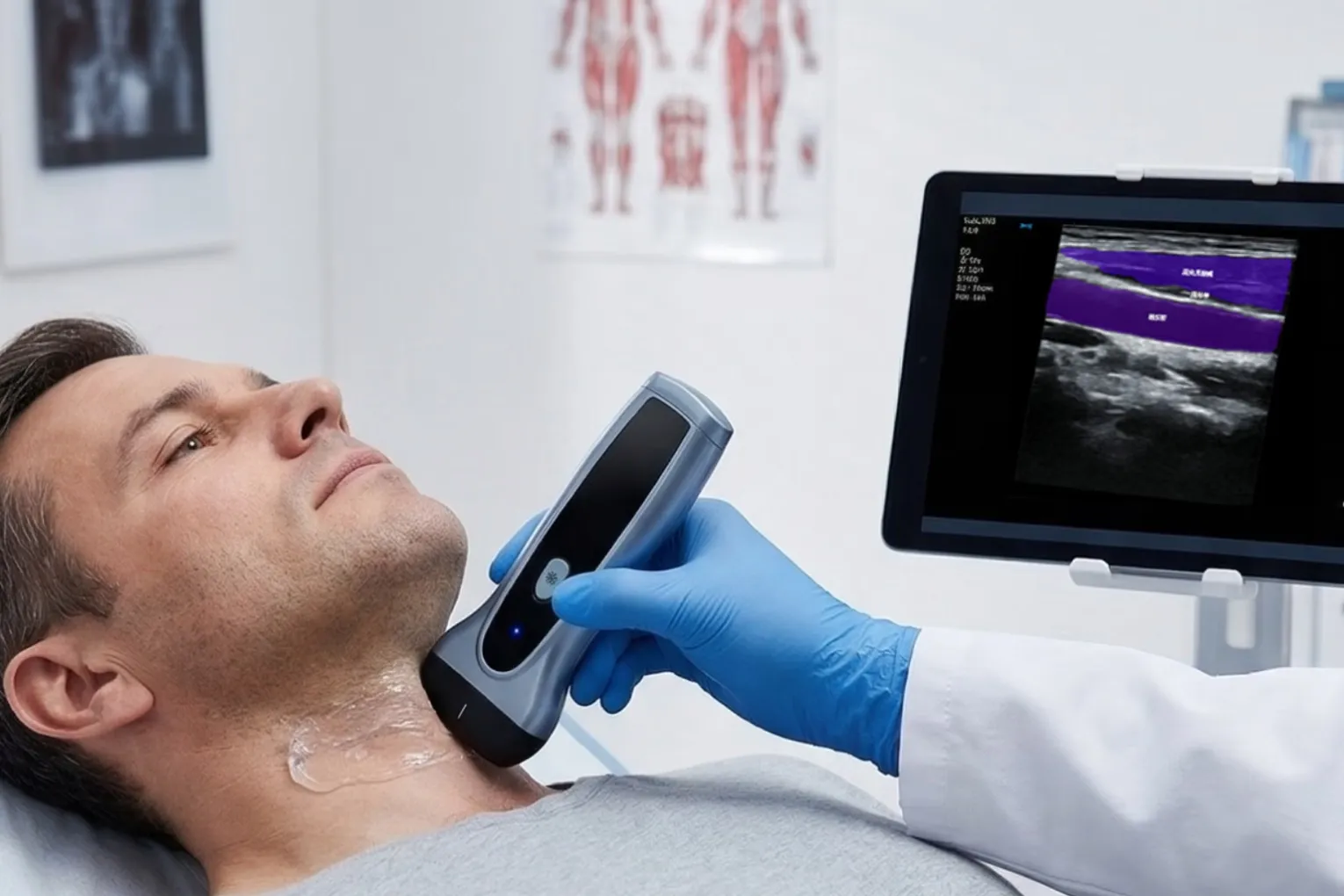
As AI features appear in more portable ultrasound systems, many buyers are asking:
What does AI actually do in an ultrasound machine?
Is it designed to replace experienced sonographers?
Can it automatically diagnose diseases?
Or is it mainly a tool to support scanning and education?
The answer depends on how each manufacturer defines and implements AI.
For hospitals, medical schools, and distributors evaluating AI-enabled ultrasound systems, understanding the real capabilities of AI is essential.
AI in Ultrasound: Assistance, Not Replacement
In medical imaging, AI is designed to support healthcare professionals by improving efficiency, consistency, and learning.
Portable ultrasound systems are often used in environments where users have different levels of experience, including:
- Experienced sonographers
- General physicians
- Emergency clinicians
- Medical students
- Ultrasound trainees
For these users, AI can provide additional guidance during scanning.
However, AI should not replace clinical expertise.
Ultrasound diagnosis still depends on:
- Patient history
- Clinical experience
- Image interpretation
- Physician judgment
AI is a supporting tool that helps users obtain and understand ultrasound images more effectively.
Common AI Functions in Portable Ultrasound
Different ultrasound manufacturers offer different AI capabilities.
Some advanced systems may include automated analysis, while other systems focus on education and scanning assistance.
Common AI functions include:
1. Anatomy Recognition
Anatomy recognition helps users identify specific anatomical structures during scanning.
This function can be especially useful for:
- Ultrasound training
- Medical education
- New operators learning scanning protocols
By recognizing anatomical regions, AI can help users confirm whether they are scanning the intended area.
For beginners, this reduces uncertainty during the learning process.
2. Operator Guidance
One challenge in ultrasound is that image quality depends heavily on operator technique.
AI guidance can help users understand:
- Where to position the probe
- Which anatomical area should be examined
- How to approach a scanning procedure
This is valuable in situations where users are still developing ultrasound skills.
3. Learning Support
Medical education is one of the important applications of AI ultrasound technology.
Traditional ultrasound training requires:
- Experienced instructors
- Practice time
- Continuous feedback
AI-assisted systems can provide additional visual support, helping students become familiar with anatomy and scanning techniques.
For ultrasound training programs, this can improve the learning experience.
What AI Does Not Automatically Mean
When buyers hear "AI ultrasound," they may assume the system includes advanced automation.
However, AI capabilities vary significantly.
AI does not automatically mean the system can:
- Diagnose diseases independently
- Replace a trained physician
- Generate final clinical reports
- Make medical decisions
Buyers should always verify the specific AI functions provided by each manufacturer.
The term "AI" describes a technology category, not a single standardized feature.
How Should Buyers Evaluate AI Ultrasound Features?
When comparing portable ultrasound systems, consider these questions:
1. What specific AI functions are included?
Ask whether the AI provides:
- Anatomy recognition?
- Measurement assistance?
- Image optimization?
- Workflow guidance?
- Automated analysis?
Different functions serve different clinical needs.
2. Who will use the system?
AI value depends greatly on the users.
For example:
Medical schools
may benefit from anatomy recognition and training assistance.
New clinicians
may benefit from guidance during early scanning practice.
Experienced sonographers
may prioritize workflow efficiency and advanced automation.
3. Is AI included permanently or subscription-based?
AI licensing models vary among manufacturers.
Before purchasing, buyers should confirm:
- Is AI a one-time purchase?
- Are annual fees required?
- Are software functions locked after subscription expiration?
- Are updates included?
Understanding licensing is part of evaluating the true cost of ownership.
COSDA Approach to AI in Portable Ultrasound
At COSDA, AI is designed as a practical assistance tool to support ultrasound learning and scanning confidence.
Our optional AI package focuses on anatomy recognition, helping users identify supported anatomical regions during examinations.
The current AI function is especially suitable for:
- Ultrasound education
- Training programs
- New ultrasound users
- Clinical skill development
COSDA believes AI should make ultrasound technology easier to learn and use while keeping clinical decisions in the hands of healthcare professionals.
Conclusion
AI is becoming an important development in portable ultrasound, but buyers should look beyond the label "AI" and understand the actual functions behind the technology.
A valuable AI ultrasound system is not necessarily the one with the most complex features, but the one that matches the user's real needs.
For education, training, and operator support, AI-assisted anatomy recognition can provide meaningful value.
When evaluating an AI-enabled portable ultrasound system, always consider:
- What does the AI actually do?
- Who will use it?
- Does it improve workflow or learning?
- What are the long-term software costs?
Understanding these factors helps hospitals, clinics, and distributors make better purchasing decisions.